
Masonry That Stops Water at the Surface
Masonry waterproofing in Noble for brick, stone, and below-grade walls where water infiltration is causing interior staining, efflorescence, or deterioration behind the wall face
Water moving through a masonry wall does not announce itself immediately. The first visible signs—white efflorescence deposits on brick faces, damp patches on interior basement walls, or paint that peels from the interior surface of an exterior wall—appear after water has already been cycling through the masonry for some time. Magic Masonry applies waterproofing to brick, stone, and masonry surfaces across the Oklahoma City metro to stop water infiltration before it reaches the point of structural deterioration, and to seal existing walls where infiltration is already producing visible damage. The work covers both above-grade masonry on residential and commercial facades and below-grade applications including basements and foundation walls.
Surface preparation is the step that determines whether a sealant performs for years or peels away within months. The masonry is cleaned to remove loose mortar, biological growth, existing failed coatings, and any efflorescence deposits—which are mineral salts carried to the surface by water movement and must be removed before sealing, or they will continue pushing outward and lift the new coating off the substrate. Once the surface is prepared, the sealer type is matched to the material: penetrating sealers for natural stone, which need to breathe and cannot be film-coated without trapping moisture inside; flexible elastomeric coatings for mortar-heavy walls where minor movement is expected; and full waterproofing membranes for basements and below-grade walls where hydrostatic pressure is the primary concern. Multiple coats may be required depending on the porosity of the surface and its exposure level.
Send photos of the affected masonry area to Magic Masonry for a free quote—most waterproofing projects can be assessed from images before any on-site visit is needed.
What Waterproofing Actually Accomplishes on Masonry
The distinction between a penetrating sealer and a surface-applied coating is not just a product choice—it determines how water vapor moves through the wall after treatment. Older brick construction common in Yukon-area residential neighborhoods was built with soft, high-absorption brick that requires a breathable treatment. Applying a non-breathable film coating to that type of brick traps moisture inside the wall, accelerating the spalling and delamination it was meant to prevent. Magic Masonry selects the waterproofing method based on the wall's construction, the direction of water pressure, and whether the wall needs to breathe or be fully sealed—decisions that require evaluating the masonry before selecting a product, not after.
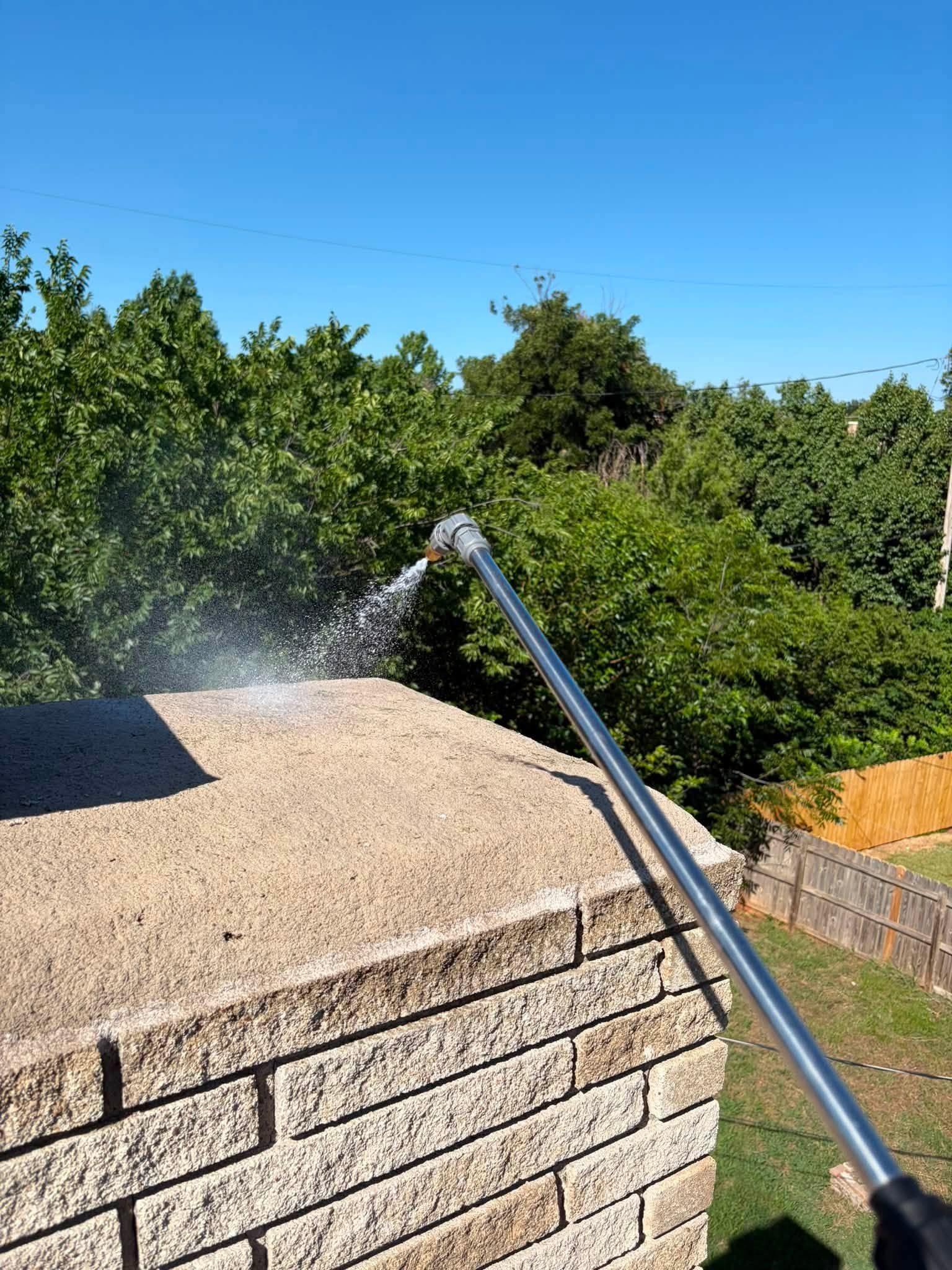
After waterproofing is applied correctly, the observable changes are specific: brick faces stop showing new efflorescence deposits, interior basement walls stop producing damp patches after rain events, and water beads and runs off the treated surface rather than being absorbed into the face. Those outcomes are testable—a simple water bead test on a prepared masonry surface confirms penetration of the sealer into the substrate and shows how water behaves on the treated versus untreated sections of the same wall.
Waterproofing is not a permanent solution applied once and forgotten. Penetrating sealers on above-grade masonry typically require reapplication on a multi-year cycle depending on exposure, surface porosity, and whether the underlying mortar joints remain intact. A wall with deteriorated joints will not waterproof effectively regardless of what is applied to the surface—joint repair and waterproofing are sequenced in that order, not reversed. Magic Masonry identifies joint conditions during surface preparation and flags any repointing work needed before the waterproofing coat is applied.
What Property Owners Ask About the Work
These questions address how masonry waterproofing is applied and what drives the decisions made during the job—relevant to the range of brick, stone, and concrete masonry structures found across the Oklahoma City metro area.
How is the masonry surface prepared before waterproofing is applied?
Loose mortar, biological growth, efflorescence, and failed coatings are removed using wire brushing, chemical cleaning agents matched to the substrate, or pressure washing at appropriate PSI settings. The surface must be fully dry before sealer application—moisture trapped under a sealer coat prevents adhesion and causes the coating to delaminate within a short period of exposure.
What is the difference between a penetrating sealer and a surface membrane for masonry?
A penetrating sealer is absorbed into the pores of the masonry and repels water from within the material while allowing vapor to pass through—appropriate for above-grade walls that need to breathe. A surface membrane sits on top of the masonry and creates a physical barrier—appropriate for below-grade applications where hydrostatic pressure pushes water against the wall and vapor permeability is less critical than full waterproofing.
Why does efflorescence reappear even after it has been cleaned off?
Efflorescence is a symptom, not the problem. It forms when water moves through masonry, dissolves soluble salts in the mortar or brick, and deposits them on the surface as it evaporates. Cleaning removes the deposit but not the water pathway. Until the entry point for water is sealed—whether through joint repair, crack repair, or surface waterproofing—efflorescence will return with every wet cycle.
How does the age and construction of a masonry wall in Noble affect the waterproofing approach?
Older walls built with lime-based mortar and soft brick require breathable treatments; newer construction using harder Portland-cement mortar and denser brick can tolerate film-forming coatings more reliably. Below-grade walls in homes built before the 1970s were often constructed without a drainage membrane or damp-proofing course, which means the waterproofing system needs to manage both surface infiltration and hydrostatic pressure from the exterior soil side.
How many coats of sealer are typically applied to a masonry wall?
The number of coats depends on surface porosity—a highly absorptive older brick may require two or three coats of penetrating sealer applied wet-on-wet before the surface reaches the saturation point that indicates adequate coverage. A denser modern brick may reach effective coverage in one coat. The bead test—applying a few drops of water to the treated surface—confirms whether the sealer has penetrated to the depth needed for long-term performance.
Magic Masonry also performs masonry waterproofing in Cherokee, Yukon, Edmond, Norman, and El Reno. To move forward, submit photos of the affected wall or basement area along with a description of where water is showing up and when it appears, and Magic Masonry will provide a free quote based on the specific conditions of your masonry.