Masonry Fire Pits That Contain Heat Correctly
Custom Fire Pit Construction in Noble for homeowners needing masonry that withstands repeated thermal cycling without cracking
The gap between a fire pit that lasts and one that begins cracking within two seasons comes down to how the interior is constructed, not how it looks from the outside. Magic Masonry in Noble builds custom masonry fire pits for homeowners across the Oklahoma City metro, using construction methods that account for the thermal expansion and contraction that fire pit walls undergo every single time the pit is used. Properties in areas like Guthrie and Arcadia with larger outdoor footprints are common candidates for custom fire pit installations that become a central feature of the exterior living space.
In most cases, the owner can quote a fire pit project accurately from photos without scheduling a site visit, which keeps the process straightforward for homeowners who are not yet committed to a start date. For complex designs or sites where placement relative to structures, utilities, or grading is unclear from photos, an on-site visit is arranged before the final estimate is issued. This distinction matters because fire pit placement relative to overhead structures and property lines affects what can be built and how it must be finished.
Arrange a photo-based quote to get accurate pricing before committing to a design or layout.
Why Masonry Fire Pits Outlast Prefabricated Alternatives
A masonry fire pit is built from the ground up using materials selected specifically for their ability to handle radiant and direct heat without degrading. The interior of a properly built fire pit uses refractory materials or fire-rated masonry units that resist the extreme temperatures produced by an active fire, while the exterior facing is selected for appearance and durability under ambient exposure. These are two distinct material zones, and treating them as interchangeable—using the same stone or block throughout—is the single most common reason fire pits crack at the interior courses within the first season of use.
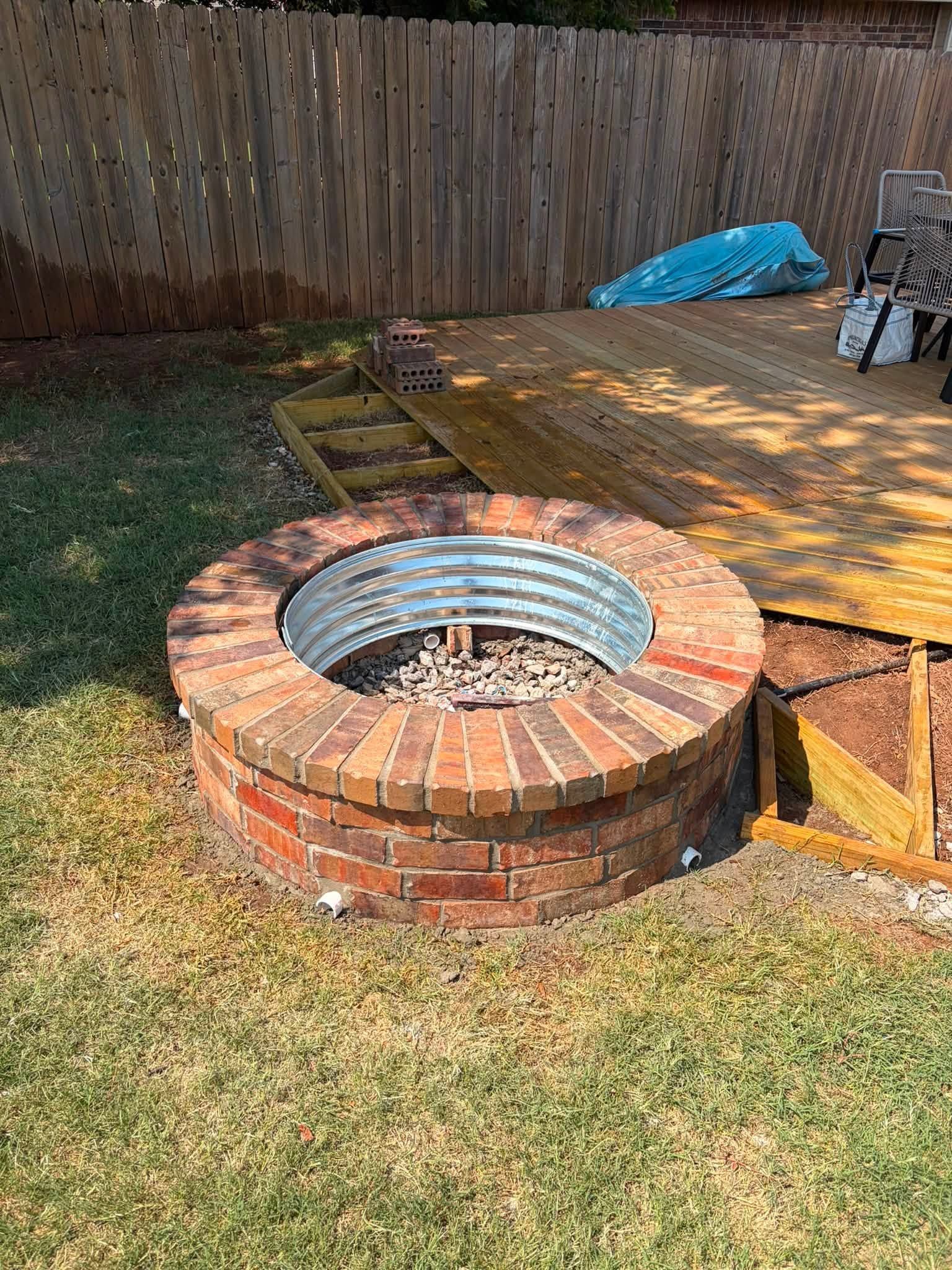
Once a well-built fire pit is complete, what you notice is structural: no mortar cracking at joints after the first fire, no spalling at interior surfaces where heat concentration is highest, and a structure that remains level and solid rather than showing early movement at the base. Magic Masonry builds fire pits with the interior construction treated as a structural and thermal problem first, with the exterior finish resolved around those requirements rather than independent of them.
Fire pit size, seating wall integration, and cap material selection all affect the final build. Cap stones and coping at the top of the pit wall take the most direct heat exposure outside the interior bowl, so material selection at that zone carries more long-term consequence than most homeowners realize when choosing based on appearance alone. These details are addressed during the quoting and design phase before construction begins.
Common Questions About This Service
Custom masonry fire pits involve a number of material and construction decisions that affect how the finished structure performs over time. These questions address the most common points homeowners ask before starting a project.
What causes masonry fire pits to crack after only a season or two of use?
Cracking is almost always caused by using standard construction masonry units or mortar in the interior burn zone—materials not rated for direct heat exposure expand at different rates than fire-rated materials, and that stress fractures mortar joints from the inside out.
How does the quoting process work for a custom fire pit in Noble?
Photos of the installation area along with basic size and design preferences are typically enough for the owner to produce an accurate quote—on-site visits are reserved for complex designs or unclear site conditions.
What should the cap or coping at the top of a fire pit be made from?
Cap material should be dense, low-absorption stone that handles heat without spalling; softer or more porous cap materials absorb heat and moisture and are the first part of an outdoor fire pit to show surface failure.
How does placement on the property affect what can be built?
Distance from structures, overhead clearances, and proximity to property lines all inform the finished height, design, and materials used—this is why unclear site conditions prompt a visit before the final estimate is locked.
What does a finished masonry fire pit look like when the work is done correctly?
Mortar joints are consistent in width and fully packed with no voids, the interior surface is free of gaps at course transitions, the structure sits level without any visible lean, and the cap is set flush without lippage between individual stones.
Magic Masonry also builds custom masonry fire pits in Cherokee, Yukon, Edmond, Norman, and El Reno. To get started, send photos of your outdoor space along with the general size and style you have in mind so a detailed estimate can be prepared.