Chimneys Built to Last Decades Longer
Chimney restoration in Noble for crumbling mortar, spalling brick, and structural deterioration that worsens with every passing season
Magic Masonry restores chimneys across the Oklahoma City metro for homeowners who are watching mortar crumble between brick courses or noticing pieces of brick face breaking away from the stack. These are not cosmetic problems—they signal that water has worked its way into the masonry and the freeze-thaw cycle is mechanically forcing joints apart. Left alone, what starts as a repointing job becomes a full chimney rebuild, and the cost difference between the two is significant.
The restoration process begins with identifying the root cause of the deterioration rather than applying a surface patch that masks the problem for another season. In most cases, that means removing damaged mortar to a sufficient depth—typically at least three-quarters of an inch—before packing new mortar that is matched in composition and color to the original. Brick units that have spalled beyond salvage are replaced with matching stock rather than left in place and coated over. The chimney flue is checked for obstructions and liner condition as part of any full restoration, since structural repairs above the roofline and a compromised flue are rarely separate problems. For homeowners in Shawnee and Purcell, where older brick chimneys on mid-century homes frequently show this exact deterioration pattern, the distinction between a genuine restoration and a surface patch matters in both safety and longevity.
Request a free quote from Magic Masonry—photos are sufficient for most projects, and an on-site visit can be arranged when the full scope requires a closer look.
What Proper Chimney Restoration Actually Requires
Mortar matching is one of the most critical decisions in chimney restoration and one of the most frequently skipped. Modern pre-mixed mortars are often harder than the original lime-based mortars used in older construction, which means any movement in the structure transfers stress to the brick face rather than the joint—causing the brick itself to crack rather than the mortar, which is the easier and cheaper component to replace. Magic Masonry matches mortar composition to the original material so that the repaired joints remain the sacrificial element in the assembly, the way they were designed to be.
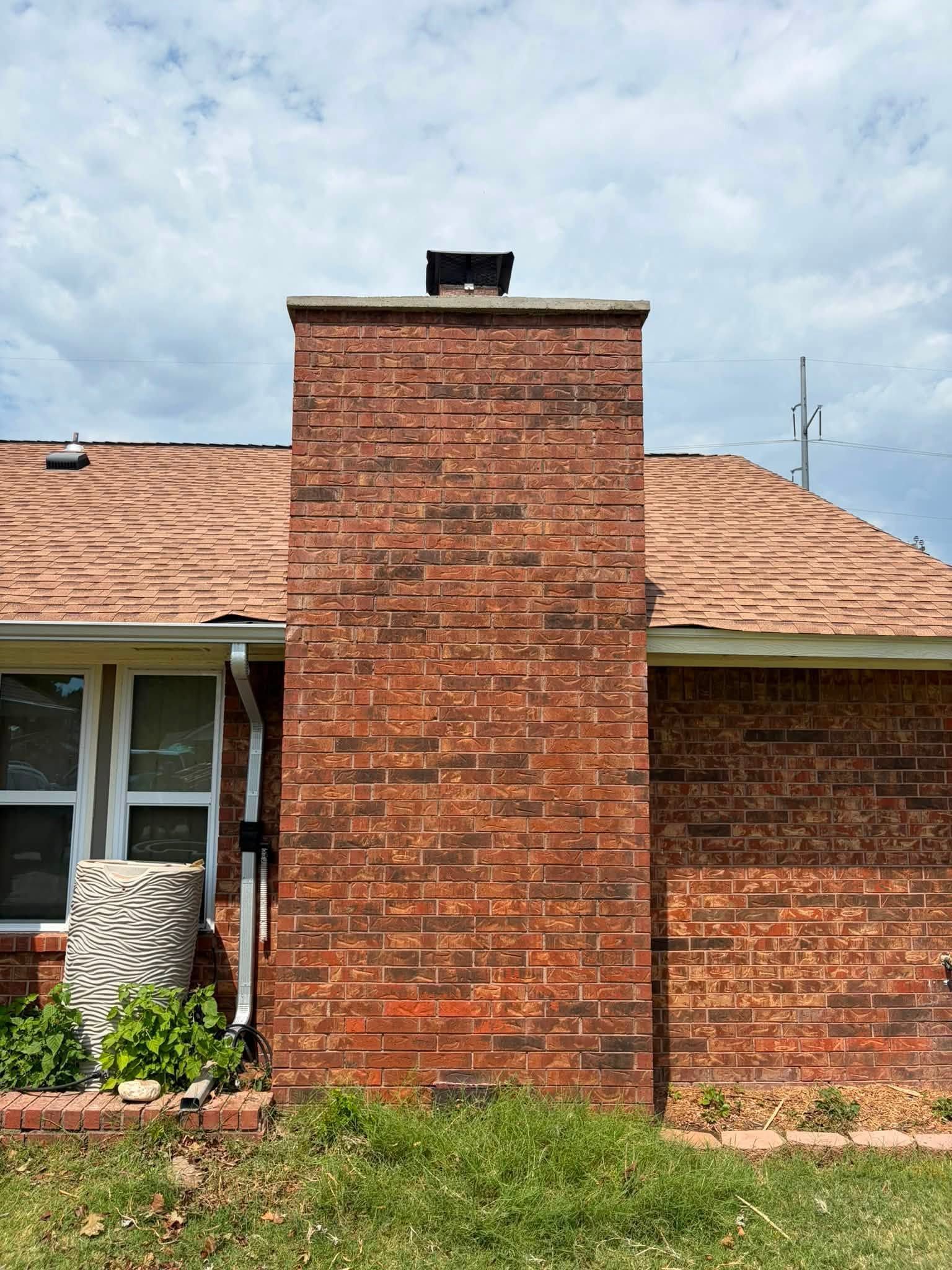
Once restoration is complete, the visible difference is a chimney stack with uniform, fully filled joints, no missing or recessed mortar lines, and no brick faces that are hollow-sounding or flaking when tapped. Those are the observable indicators that the masonry is performing as a weather-resistant system rather than absorbing water into its core. The structural difference is that the load path from cap to crown to firebox is continuous again, without voids or compromised units interrupting it.
Restoration work also addresses the chimney cap and crown, since a cracked crown is typically the entry point that allows water to migrate into the mortar joints below. Repairing the crown without addressing the joints, or repointing the joints without repairing the crown, leaves half the system open to continued deterioration. A complete restoration closes all water entry points in sequence.
Common Questions About Chimney Restoration Work
These questions address how chimney restoration is performed and what drives the decisions made during the job. They are drawn from the conditions found on older and mid-century masonry construction common across the Oklahoma City metro.
What is the difference between chimney repointing and full chimney restoration?
Repointing addresses mortar joints only—removing deteriorated mortar and packing new material into the joints. Full restoration includes repointing but also replaces spalled or failed brick units, repairs the crown and cap, and evaluates flue condition, making it appropriate when the masonry has sustained structural damage rather than surface-level joint erosion alone.
How do you determine whether a chimney needs partial repair or a complete rebuild?
The assessment looks at crack patterns, the condition of individual brick units, whether the chimney is plumb, and whether the crown and flue liner are intact. A chimney that is leaning, has multiple courses of failed brick, or has a collapsed liner is a rebuild candidate; one with localized joint erosion and intact units is typically restorable.
What mortar type is used when restoring an older brick chimney?
The mortar mix is matched to the original construction—older chimneys built before the mid-twentieth century typically used softer lime-based mortars, and replacing those joints with a high-Portland-cement mix creates a hardness mismatch that causes brick spalling. Matching the mortar type protects the brick face over the long term.
How do you tell whether mortar damage is still active or has stabilized?
Active movement produces cracks with sharp, clean edges and displaced sections; dormant cracks show staining, rounded edges, and debris accumulation in the gap. Active movement requires identifying and stabilizing the source before repointing, or the new mortar will crack along the same lines within a season or two.
What should you check after chimney restoration is finished?
Look for fully packed, flush mortar joints with no voids, a crack-free crown, and consistent brick faces with no hollow spots. Inside, the flue should be free of obstructions and the liner should show no gaps or missing sections when viewed from the firebox opening with a flashlight angled upward.
Magic Masonry also performs chimney restoration in Cherokee, Yukon, Edmond, Norman, and El Reno. To get a detailed assessment of your chimney's current condition, submit photos through the quote process or arrange an on-site evaluation for larger or more complex restoration projects.